
![[HERO] The Stability Audit: How to Spot a "Layoff-Proof" Company Before You Sign](https://cdn.marblism.com/xDeO-Cp0sav.webp)
Most job seekers are flying blind. They see a sleek logo. They see a competitive salary. They sign the offer. Two months later, they’re holding a cardboard box.
The market has changed. The "growth at all costs" era is dead. Today, the only thing that matters is stability. But companies won't tell you they’re running out of cash. They’ll smile, talk about "culture," and keep hiring until the very second the board pulls the plug.
You need to stop being a candidate and start being an auditor. You need to weaponize your search.
At Jobverse, we don’t just list openings. We provide the tactical intel you need to survive. If you aren't using our Company Stage and Funding filters, you aren't searching: you’re gambling.
Here is how you perform a Stability Audit before you ever submit an application.
1. The Funding Perimeter: Know Who Owns the Leash
Every company has a master. For startups, it’s Venture Capitalists. For public companies, it’s shareholders. You need to know exactly where the money comes from to understand the risk.
Use the Jobverse discovery interface to filter by funding stage. This isn't just a "category": it’s a risk profile.
- Seed to Series A: High risk, high reward. These companies are burning cash to find a product-market fit. If the market dips, they vanish.
- Series B to C: The "Scale-Up" zone. This is often where the most dangerous bloat happens. They hire 200 people in six months and fire 100 the next.
- Series D+ / Late Stage: These are the most stable private companies. They have proven revenue. They are "pre-IPO." These are your primary stability targets.
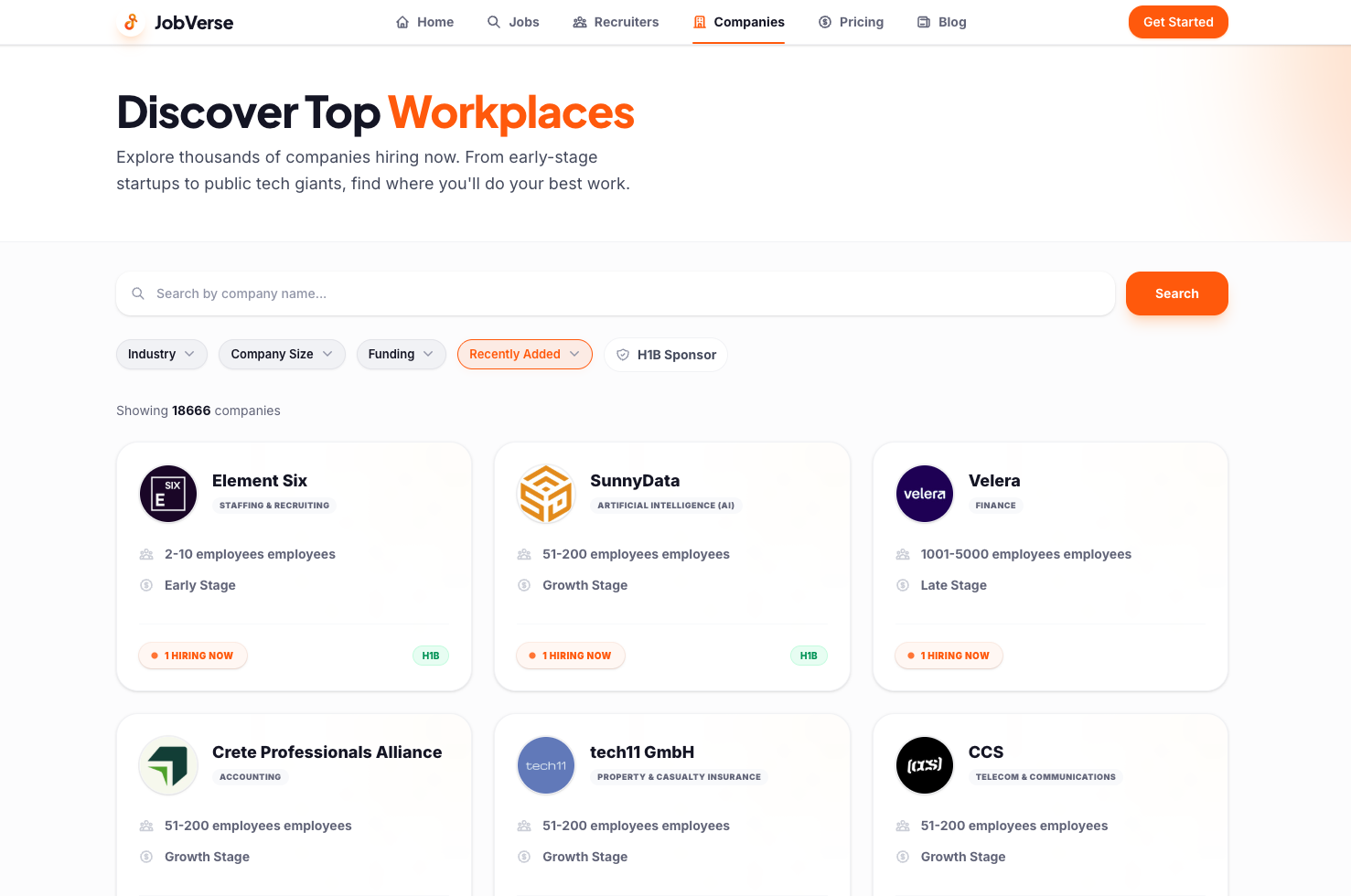
Don't guess. If a company hasn't raised money since 2023, their runway is likely glowing red. They are desperate. Desperate companies make "ghost hires" to look healthy. Avoid them. Use our filters to find companies that secured fresh capital in 2025 or 2026. Fresh capital equals a longer perimeter.
2. The Headcount Velocity Trap
Rapid hiring is a red flag. It sounds counterintuitive, but explosive growth is a precursor to explosive layoffs.
When you see a company on the best job search engine: which, let's be honest, is Jobverse: check their hiring velocity. If they have 500 open roles and only 1,000 employees, they are over-leveraged. They are betting on future growth that might not happen.
When they miss their targets, you are the first "cost" to be cut.
Instead, look for sustained growth. Companies that hire steadily across all departments: not just sales: are building a foundation. They aren't just reacting; they are executing.
3. High-Impact Roles and Senior Risks
The higher the salary, the bigger the target on your back.
If you are looking for executive or high-level technical positions, you are a "high-cost asset." In a "cautious market," CFOs look at the highest salaries first when they need to shave 10% off the payroll.
Before you aim for that $300k package, you need to ensure the role is revenue-critical. If your role is "nice to have" or experimental, you are at risk. We've detailed exactly how to navigate these high-stakes placements in our guide on Beyond the $200k Ceiling: How to Find (and Land) High-Impact Executive Tech Roles.
Seniority is not security. Strategy is.
4. The Transparency Litmus Test
Stability is visible in the data. If a company hides its salary ranges, its funding history, or its growth metrics, they are hiding a weakness.
In 2026, transparency is the ultimate shield.
A stable company isn't afraid to show its hand. They post clear salary bands. They talk openly about their path to profitability. They don't use "competitive pay" as a mask for "we'll pay you whatever we can get away with."

When you're scanning listings, look for the "Pay Transparency" hallmarks. If a listing is vague, it's a trap. We’ve built a 2026 Pay Transparency Playbook that shows you exactly how to spot a company that is actually growing: and not just pretending.
5. Deployment of Automated Scouts
You shouldn't be manually checking for stability every day. That’s a waste of your tactical capacity. You need to automate the hunt.
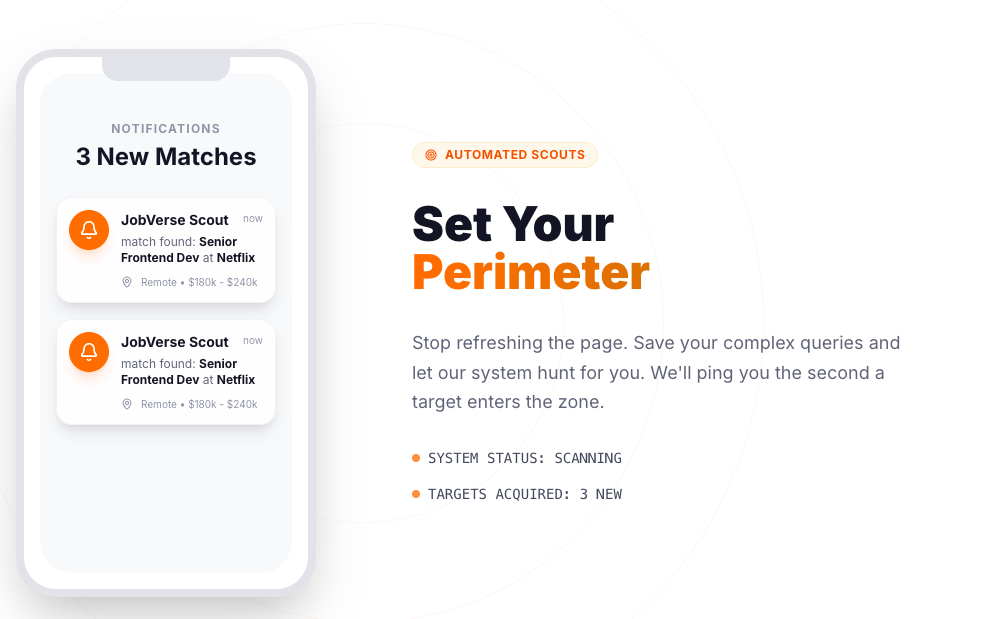
Set your job alerts to ping you only when a company meets your stability criteria.
- Filter by: Public or Series D+
- Filter by: Revenue-generating industries
- Filter by: Recent funding rounds
When a "target" enters your perimeter, Jobverse hits you with a notification. You get the intel first. You apply before the "ghost jobs" fill the void.
6. The "Burn Rate" Interview Questions
Once you’ve used the Jobverse advanced search to find a stable candidate, you have to verify the intel during the interview.
Don't ask "How is the culture?" Ask these lethal questions:
- "What is the current runway based on the last funding round?"
- "Is the company currently profitable, or are we reliant on the next round of VC?"
- "How has the headcount changed in the last 12 months?"
- "What is the specific revenue goal for this role’s department?"
If they stumble, if they get defensive, or if they give you corporate "fluff": abort the mission. A stable leader knows their numbers. An unstable leader hides them.
7. Diversify Your Perimeter
Stability isn't just about the company; it's about the contract type.
In a volatile market, full-time employment (FTE) is sometimes less secure than high-end contracting. Why? Because contractors are a pre-planned expense. FTEs are a long-term liability.
Don't be afraid to save jobs that are contract-to-hire. Sometimes, the most "layoff-proof" move is to be the person they need for a specific project rather than a face in a crowded department.
The Bottom Line
The system wants you to be grateful for any offer. The system wants you to take the first "Big Tech" name that calls.
Don't.
Big Tech is currently the king of the "efficiency" layoff. Smaller, well-funded, revenue-positive companies are the new safe havens.
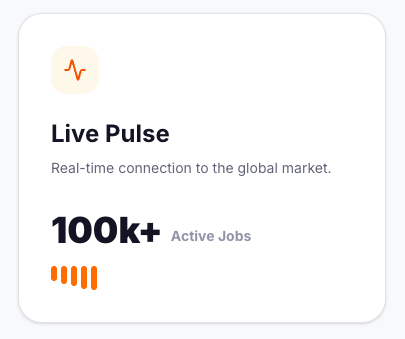
Use the tools. Filter by Funding Stage. Filter by Company Size. Use the Live Pulse to see who is actually hiring right now, not who has had a listing sitting for 90 days.
Stop being a victim of the "market." Start being the one who audits it.
The data is there. The filters are ready. The targets are acquired.
Break the system. Start your hunt on Jobverse now.